
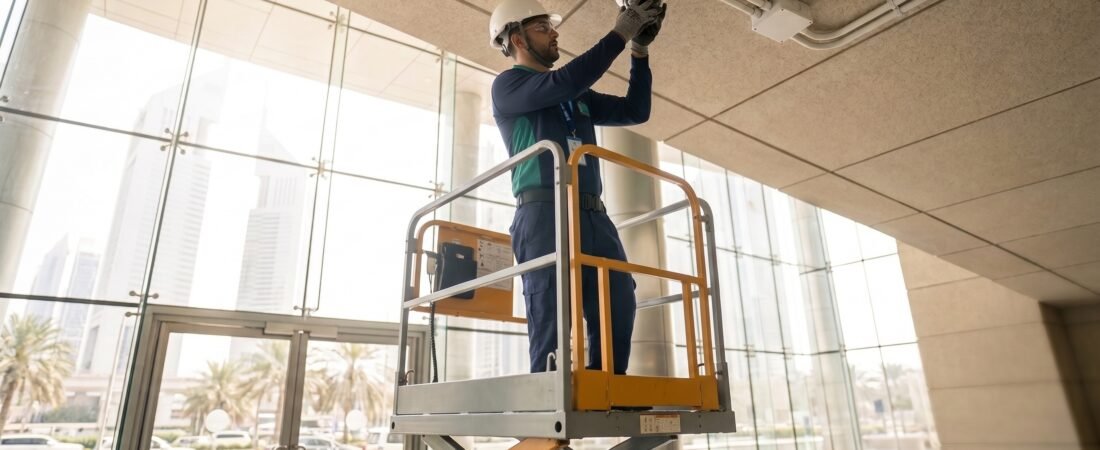
CCTV installation in Dubai isn’t like buying a camera kit and mounting it on a wall. For many premises, it’s a regulated process: a licensed company designs the system, the design is approved, the installation is inspected, and the system has to keep working to a defined standard once it’s live. Get it wrong and you can face a failed inspection, a delayed licence or a system that doesn’t protect what it was meant to.
This guide explains how the regulatory framework works, what the process looks like from first survey to final handover, what affects the timeline and cost, and how to choose an installer who can get your system approved first time.
Who Regulates CCTV Installation in Dubai?
The Security Industry Regulatory Agency, known as SIRA, was established in 2016 by decree and oversees the private security sector in Dubai, licensing and certifying security companies and professionals and approving and inspecting security equipment and systems. In practice, that means two things for anyone planning CCTV installation in Dubai:
- The company doing the work needs to be properly licensed: for security systems activity, and the people doing it need the relevant SIRA certifications.
- The system itself may need approval and inspection: depending on the type of premises.
Sources describing the process also note that even licensed companies must obtain technical clearance before installing CCTV or other surveillance systems. SIRA’s official website, sira.gov.ae, is where the current rules, services and forms are published, and it should be your reference point for anything specific.
Does Your Property Need a SIRA Approved System?
This depends on what kind of premises you have, and the categories and thresholds are set by SIRA, not by installers. As a general guide:
- Commercial and higher-risk premises: such as shops, offices, restaurants, hotels, banks, warehouses, schools and healthcare facilities are the types most commonly subject to security-system requirements
- Large residential buildings and mixed-use developments: often have security system requirements built into their approvals and design specifications
- Private homes and small villas: are generally treated differently, but you should still use a licensed installer and confirm the position for your property
Don’t guess. Ask your installer to confirm in writing which category your premises falls into and which requirements apply, and check it against SIRA’s published information. A good company will do this as part of the survey.
The Step-by-Step CCTV Installation Process in Dubai
Step 1: Define What You Need to Protect
A good project starts with a short risk assessment, not a camera count. What are you protecting: cash points, stock, entrances, car parks, people? What do you need to be able to prove or investigate later? The answers decide where cameras go and what quality they need.
Step 2: Site Survey
A licensed installer walks the premises and records entrances and exits, blind spots, lighting conditions, cable routes, power availability, mounting heights and network access. Surveys also check whether anything will interfere with coverage later, such as signage, planting, shelving or future fit-out changes.
Step 3: System Design and Approval Submission
The installer produces a design: camera positions and types, coverage plans, recording and storage arrangements, power and network layout and a bill of equipment. Where approval is required, this design and its supporting documents are submitted for review. Work shouldn’t start until the approvals needed for your premises are in place.
Step 4: Equipment Selection and Procurement
Equipment has to suit both the design and any approval requirements. That usually means checking that the cameras, recorders and software are compatible with the requirements that apply to your category of premises, not just that they’re good quality.
Step 5: Installation
Cabling, camera mounting, recorder and storage setup, power and backup arrangements and network connections are carried out to the approved design. Neat, protected cabling and correctly rated outdoor housings matter in Dubai’s heat, dust and humidity.
Step 6: Testing and Commissioning
The installer tests every camera: coverage, focus, night performance, recording, playback and any remote access. This is where blind spots and low-light problems are found and fixed.
Step 7: Inspection and Certification
Where required, the installed system is inspected against the approved design and the applicable requirements before it’s cleared for use. Installation that doesn’t match the approved design, or coverage that falls short, is a common reason for delay.
Step 8: Handover and Training
You should receive as-built drawings, equipment and warranty details, login credentials, instructions for playback and export, and a short training session for whoever will operate the system.
Step 9: Maintenance and Ongoing Compliance
A system that quietly stops recording is worse than none. Scheduled maintenance, periodic checks and prompt repair keep it working and keep you compliant over time.
Key Design Factors That Decide Whether a System Works
| Factor | Why It Matters |
|---|---|
| Camera type and resolution | Fixed, dome, PTZ and specialist cameras suit different jobs, and image quality must be good enough to identify people or vehicles where that’s the purpose |
| Coverage and placement | Entrances, exits, cash points, loading areas and car parks need deliberate coverage, with no avoidable blind spots |
| Lighting and night performance | Poor lighting ruins footage; the design should allow for low-light and glare conditions |
| Storage and retention | Footage has to be kept for the period that applies to your premises, which means sizing storage correctly from the start |
| Reliability and backup | Power cuts and hardware failures shouldn’t create gaps; backup power and monitoring help |
| Network and remote access | Remote viewing must be secure and, where required, meet the approved arrangements |
| Cybersecurity | Default passwords and exposed devices are a real risk; systems should be hardened and access controlled |
| Weather and environment | Outdoor equipment needs the right protection for heat, dust, humidity and sun |
Privacy and Legal Responsibilities
CCTV installation in Dubai comes with obligations beyond the installation itself:
- Don’t film areas where people reasonably expect privacy: such as restrooms, changing areas or neighboring private spaces. UAE law takes unauthorised filming seriously.
- Use clear signage: where required so people know cameras are operating.
- Control access to footage: Only authorized people should be able to view or export recordings, and exports should be logged.
- Handle footage responsibly: Don’t share recordings publicly or on social media, and release footage to authorities through proper channels.
- Think about employees and tenants: Cameras in workplaces and shared buildings raise expectations around notice and fair use.
Laws and guidance in this area change, so ask your installer and your legal adviser to confirm what applies to your situation.
How Long Does CCTV Installation Take in Dubai?
Timelines depend more on approvals and complexity than on the physical installation. As a planning guide:
| Stage | What Drives Its Length |
|---|---|
| Survey and design | Premises size, number of floors and areas, and how quickly access is arranged |
| Approval review (where required) | Completeness of the submission and any comments that need answering |
| Procurement | Equipment availability and lead times |
| Installation | Number of cameras, cable routes, mounting difficulty and working-hours restrictions |
| Commissioning and inspection | Defects found in testing and availability of the inspection |
A small, straightforward system can move quickly once approved. Larger or regulated projects take longer, and a first-time failure at inspection adds delay. Build in realistic buffers, and ask your installer for a written program.
What Affects the Cost?
Costs vary widely, so any quotation should be itemised. The main drivers are:
- Number and type of cameras
- Resolution and specialist features
- Storage size and retention period
- Premises size, cable routes and mounting difficulty
- Network, power and backup requirements
- Approval and inspection requirements for your category
- Software, remote access and integration with alarms or access control
- Maintenance and support contracts
Be cautious of unusually low quotes. They commonly exclude approvals, adequate storage, proper cabling or maintenance, and those gaps show up later.
Common Reasons CCTV Systems Run Into Trouble
- Coverage gaps at entrances, tills or loading areas
- Image quality too low to identify what the system was meant to capture
- Storage that overwrites footage too early for the retention period that applies
- Equipment that doesn’t match the approved design
- Cameras mounted or cabled poorly and failing in the heat
- Missing or incomplete documentation
- Starting work before approvals are in place
- No maintenance, so cameras fail unnoticed
Most of these are avoidable with a proper design stage and a competent installer.
How to Choose a CCTV Installer in Dubai
- Check their SIRA licensing yourself: Ask for their license details and verify them with SIRA rather than relying on a claim.
- Confirm their technicians hold the relevant certifications.
- Ask how approvals work for your type of premises: and whether they handle the submission.
- Insist on a site survey: before any quotation.
- Ask for a written design: including camera positions, coverage and storage calculations.
- Check the equipment: is suitable for the requirements that apply to you, and ask about warranty.
- Request references: from comparable premises.
- Get an itemised quotation: that states what’s included, including approvals, training and maintenance.
- Ask about support: response times, maintenance contracts and remote monitoring.
Maintenance and Annual Support
A CCTV system is only useful if it’s recording and the footage is usable on the day you need it. A good support arrangement includes:
- Scheduled inspections and cleaning of cameras
- Checks that every camera is recording and the storage is healthy
- Firmware and security updates
- Testing of backup power
- Prompt repair, with defined response times
- A log of visits and faults for your records
For regulated premises, this record helps show the system has been kept in working order.
Plan It Properly, Install It Once
Good CCTV installation in Dubai starts with a clear purpose, a proper survey and a design that fits both your premises and the rules that apply to them, followed by careful installation, testing and maintenance. A licensed installer who handles the approvals, documents everything and supports the system afterwards protects both your property and your licence.
Book a free site survey with Blue Diamond licensed team, They will assess your premises, explain what applies to your property and give you a clear written design and quotation for your CCTV system anywhere in Dubai.
Contact us today on WhatsApp | Call | Email
Phone: +971 54 799 0113
Most Frequently Asked Question
Do I need SIRA approval for CCTV in Dubai?
It depends on your type of premises. Many commercial and higher-risk premises are subject to security-system requirements and approval, while private homes are generally treated differently. Ask a SIRA-licensed installer to confirm the requirement for your property in writing and check it against SIRA’s published information.
Can any electrician or IT company install CCTV in Dubai?
Not for regulated security-system work. Companies and technicians carrying out security-system activity need to be properly licensed and certified. Always verify the installer’s licence before you sign anything.
How long does CCTV installation take in Dubai?
That depends on the size of the system and whether approvals and inspections apply. The physical installation of a small system can be quick, but design, approval, procurement and inspection often take longer than the installation itself.
How long must CCTV footage be kept?
Retention requirements exist and vary by premises category, so get the exact period for your type of property from your installer and SIRA’s published requirements, then size your storage accordingly.
Can I view my CCTV remotely?
Often yes, but remote access must be set up securely, and regulated premises may need to follow specific approved arrangements. Ask your installer how remote access will be configured and protected.
Book Your Service In 30 Seconds
- 24/7 Support
- Customized solutions
- Experienced Technicians
- AMC Services
